


Classification of European Sunroom Styles (Part 1)
The main styles of European sunrooms are Mediterranean, Victorian, Byzantine and Gothic. With the rapid development of real estate in recent years, European-style sunrooms have brought free and individual architectural ideas. As a byword for fashionable decoration, the European sunroom has become increasingly popular with decoration designers and homeowners pursuing an elegant life. A sunroom is a brand-new living space, a place between public and private... as the functions and forms of sunrooms develop, a unique industry between decoration and architecture has gradually taken shape.

An excellent sunroom must have its frame designed by professional structural engineers. Besides meeting international basic material requirements, construction workmanship is also crucial — every detail deserves special attention, from the matching of materials to the connectors of frame profiles, which should be hidden as much as possible; even a tiny screw can affect the overall beauty. We often tell our construction workers that doing a detail well may cost a few extra minutes or hours for us, but for the owner of the sunroom it may be something they face for a lifetime.

European sunrooms come in different shapes for different uses
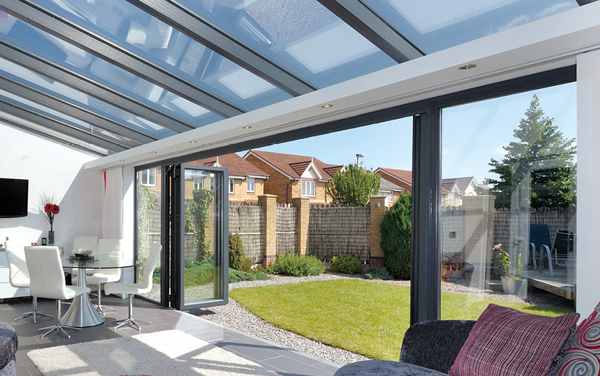
Among European sunrooms, Mediterranean, Victorian, Byzantine and Gothic are the most common shapes and are relatively easy to recognize. The Mediterranean sunroom, also called the Emerald Building, combines upright supporting frames with a sloping flat roof — extremely simple, with an affinity that blends heaven, earth and people into one.
The Victorian style, also called the Crystal Pavilion, follows the court architecture of the Victorian era in Britain. Rectangular or trapezoidal sloping faces are built with frame structures and exaggerated decorations adorn the top; the shape is square below and pointed above, classical and solemn. Multiple faceted surfaces reflect different sunlight, glittering like a diamond, hence the nickname "Diamond House".

The Byzantine style, also called the Gem House, draws its design inspiration from the Hagia Sophia of over a thousand years ago. The combination of dome and light is like a radiant heaven, placing people in a dreamlike scene. Connecting the wall and the floor is a huge curved surface; inside the curved-top sunroom, it seems not cold glass but an elegant, soft arc that separates the space.
European sunrooms also come in ridge, octagonal and single-slope shapes. Different styles can be chosen to match the architectural theme, and various colors and shapes can be selected according to personal preference, though they should ideally harmonize with the facade of the main building.